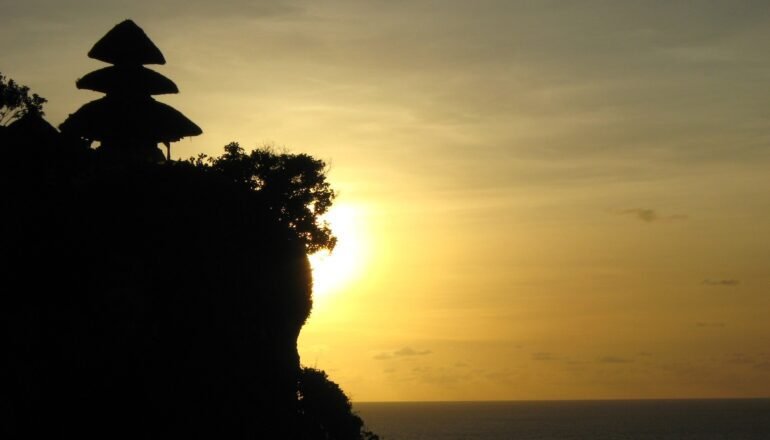
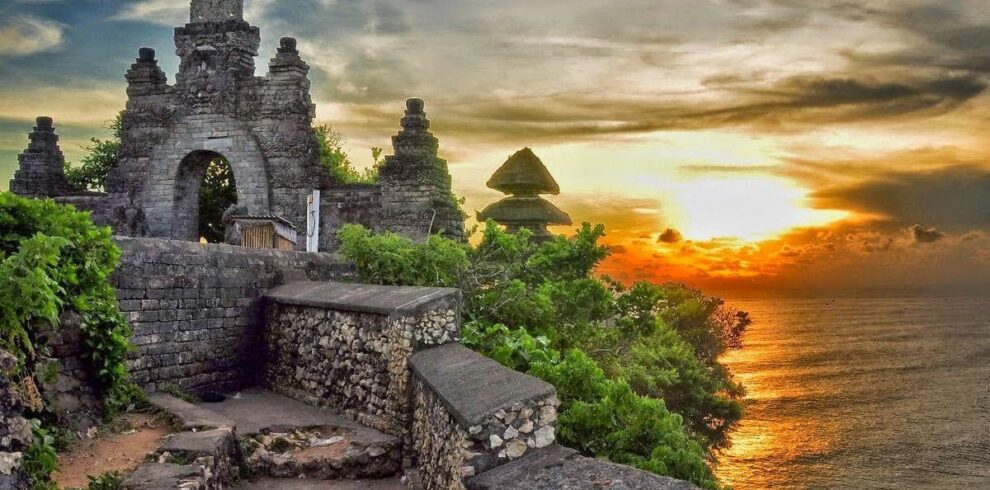
Uluwatu Temple, known as Pura Luhur Uluwatu, stands proudly on the southwestern tip of Bali. Perched atop a towering cliff, the temple overlooks the Indian Ocean and offers spectacular views. Beyond its dramatic location, the temple holds deep spiritual meaning and a rich cultural history. It continues to attract pilgrims, travelers, and spiritual seekers from around the world.
Historical Background of Uluwatu Temple
Origins of the Temple
Uluwatu Temple dates back to the 11th century, during the era of Empu Kuturan, a Javanese sage and spiritual leader. He introduced Hinduism to Bali in a more structured form and helped build several important temples on the island, including Uluwatu.
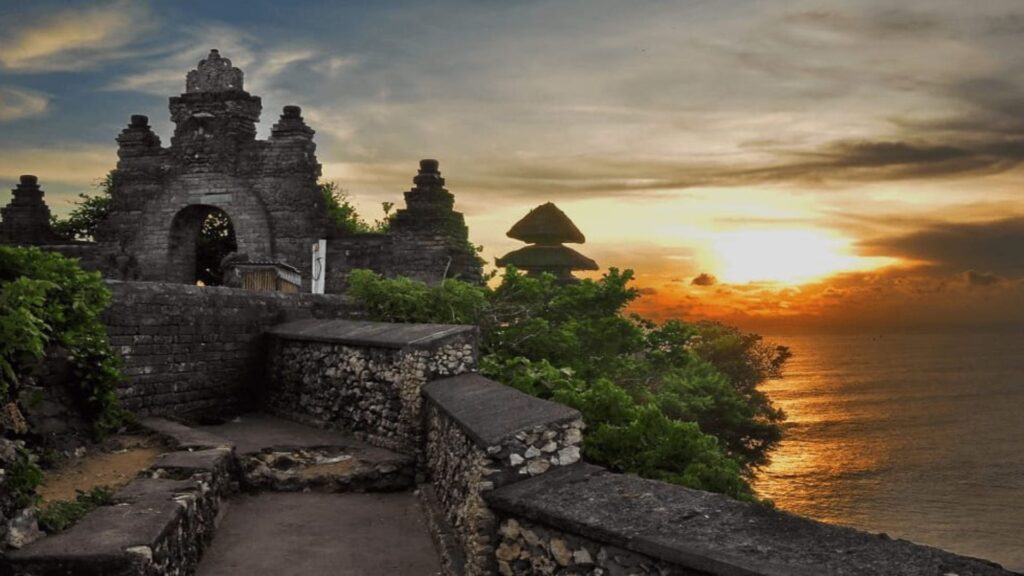
According to Balinese records, Empu Kuturan was responsible for establishing the Sad Kahyangan, or the six main spiritual pillars of Bali. Uluwatu Temple is one of these six, representing the spiritual balance and protection of the island.
Role of Dang Hyang Nirartha
Later, in the 16th century, another priest named Dang Hyang Nirartha visited Uluwatu. He was a highly respected Hindu sage from East Java. After traveling across Bali and building several temples, he chose Uluwatu as the final place for moksha, or spiritual liberation.
Balinese Hindus believe that Nirartha attained enlightenment and disappeared into the spiritual realm from this very site. Because of this, Uluwatu Temple became even more sacred. Today, he is honored as a deified spirit and protector of the temple.
Name and Meaning
The name “Uluwatu” comes from two Balinese words: “ulu” meaning head or tip, and “watu” meaning rock. Thus, Uluwatu means “the rock at the land’s end.” The name perfectly describes the temple’s location on a rugged limestone cliff, more than 70 meters above sea level.
Cultural and Spiritual Significance
One of the Sad Kahyangan Temples
Uluwatu is one of Bali’s Sad Kahyangan Temples, which are considered the main directional temples that guard the island. Each temple represents a cardinal direction. Uluwatu protects the southwest, associated with Lord Rudra, a fierce manifestation of Shiva.
This role makes the temple vital in maintaining spiritual balance across Bali. Locals believe that prayers offered at Uluwatu strengthen protection against negative forces coming from the ocean.
Temple for Sea Guardians
Unlike other temples that face rivers or mountains, Uluwatu directly faces the open sea. Therefore, it is considered a Pura Segara, or sea temple. These temples honor Baruna, the sea god, and function to guard Bali from evil spirits coming from the waters.
Additionally, the temple helps maintain harmony between humans, nature, and the gods, reflecting the Tri Hita Karana philosophy—central to Balinese culture.
Rediscovery and Restoration
Although Uluwatu Temple remained active over centuries, it gained international attention during the Dutch colonial period. Western scholars began documenting the temple in the 19th and early 20th centuries. However, several natural disasters and lightning strikes damaged parts of the complex over time.
As a result, restoration efforts began in the late 20th century, especially after tourism started booming. Today, the temple is well maintained by local custodians known as pemangku, and religious festivals are held regularly.
Layout and Architectural Features of Uluwatu Temple
General Layout
The layout of Uluwatu Temple follows traditional Balinese temple architecture, which divides the space into three zones:
- Outer Sanctum (Jaba Pisan)
- Middle Courtyard (Jaba Tengah)
- Inner Sanctum (Jeroan or Utama Mandala)
Each zone represents a different level of spiritual purity, moving from the least sacred to the most sacred.
1. Outer Sanctum (Jaba Pisan)
As you enter the temple grounds, you first arrive at the outer sanctum. This area includes:
- Pathways and gardens
- Stone sculptures and guardian statues
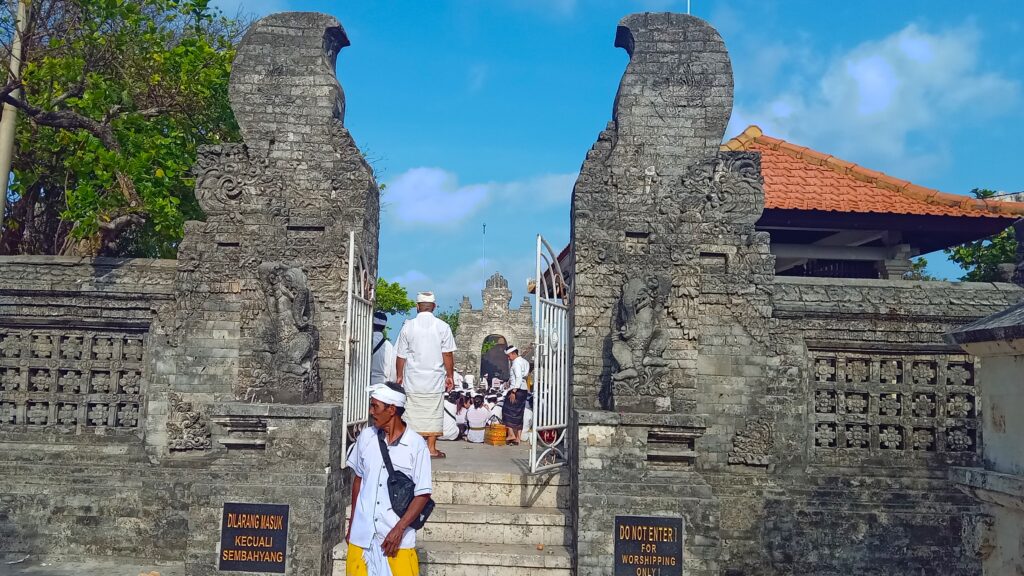
- A split gate (Candi Bentar) marking the entrance
This zone is open to visitors and is used for preparation before entering deeper into the temple.
2. Middle Courtyard (Jaba Tengah)
Next, the middle courtyard contains supporting structures such as:
- Bale Kul-kul (drum tower)
- Pavilions (bale) for offerings and temple meetings
- Worship platforms for processions and ceremonies
This zone is more spiritually refined. Only those wearing proper temple attire—a sarong and sash—may enter this area during ceremonies.
3. Inner Sanctum (Jeroan)
Finally, the inner sanctum is the most sacred part of Uluwatu Temple. Here, only Hindu priests and authorized worshippers are allowed. This area contains:
- Meru towers, multi-tiered shrines honoring gods
- Pelinggih, or stone altars
- The main shrine dedicated to Lord Rudra
Although tourists cannot enter this zone, it remains the spiritual core of the entire temple.
Cliffside Layout and Surroundings
Temple on the Edge
Uluwatu Temple’s most iconic feature is its dramatic location. The temple sits on a sheer limestone cliff, overlooking the endless waves of the Indian Ocean. This cliff rises over 70 meters, creating a breathtaking view that attracts photographers, travelers, and sunset lovers.

The temple’s walls and courtyards are built along the edge, allowing worshippers to walk beside the cliff safely. Along this path, you’ll find carvings, altars, and ocean views at every turn.
Forest and Monkey Population
Surrounding the temple is a sacred forest filled with long-tailed macaques. Locals believe these monkeys protect the temple from evil. However, they are also known for snatching sunglasses, phones, or food from tourists. As a result, visitors are advised to hold onto their belongings.
Ceremonies and Kecak Dance Performances
Daily Offerings and Full Moon Ceremonies
Every day, Balinese Hindus bring canang sari (flower offerings) to Uluwatu. These offerings honor the gods and maintain harmony. On Purnama (full moon) and during the Galungan festival, the temple becomes even more vibrant with decorations, music, and prayers.
Piodalan Temple Anniversary
Uluwatu Temple’s main festival, known as Piodalan, is held every 210 days based on the Balinese Pawukon calendar. During this time, villagers from nearby areas come in traditional dress, bringing large offerings of fruits, cakes, and flowers. The temple is adorned with colorful umbrellas and penjor (bamboo poles).
Kecak and Fire Dance at Sunset
Every evening before sunset, the temple’s cliffside stage hosts a mesmerizing Kecak and Fire Dance. This traditional performance retells the Ramayana epic, where Prince Rama rescues Sita with the help of Hanuman and his monkey army.
The performance features:
- Chanting chorus of 50+ men in a rhythmic “cak-cak-cak” beat
- Fiery scenes and dramatic storytelling
- Ocean sunset as a natural backdrop
This combination of dance, drama, and nature creates a one-of-a-kind spiritual experience.

Tips for Visiting Uluwatu Temple
1. Dress Respectfully
Wear a sarong and sash, both of which are usually provided at the entrance. This shows respect to the gods and temple keepers.
2. Visit During Sunset
The best time to visit is in the late afternoon, so you can enjoy the sunset and attend the Kecak performance.
3. Watch Out for Monkeys
Hold onto your personal items, especially glasses, hats, and snacks. Monkeys are clever and quick.
4. Observe Temple Etiquette
Avoid loud noises, do not climb on temple structures, and always follow local instructions.
Nearby Attractions
After visiting Uluwatu Temple, you can explore other stunning locations nearby:
- Padang Padang Beach – Great for surfing and sunbathing
- Suluban Cave Beach – A hidden gem under limestone cliffs
- Garuda Wisnu Kencana (GWK) Cultural Park – Home to a massive Vishnu statue
- Melasti Beach – Famous for its white sands and dramatic cliffs
- Jimbaran Bay – Known for fresh seafood dinners by the beach
Opening Hours
Uluwatu Temple is open daily 07:00 AM to 07:00 PM for general visitors.
Note: If you want to watch the Kecak Dance performance, gates for that usually open earlier (often in the late afternoon), and the performance starts around 6:00 PM.

On special religious occasions/ceremonies or during “Nyepi” (Silent Day) the rules can differ; parts may be closed.
Entrance Fees & Tickets Here are the usual entrance fee rates: International visitors IDR 50,000 – IDR 30,000 Domestic (Indonesian) visitors IDR 30,000 – IDR 20,000
Additional costs / extras:
Kecak Dance show: IDR 150,000 per person in many sources.Parking is extra: motorcycles (scooters) IDR 2,000; cars – IDR 5,000.Sarong & sash: required for temple dress code; often provided at entrance or rentable.
Uluwatu Temple is more than just a scenic cliffside destination. It is a sacred spiritual stronghold rooted in Bali’s ancient history and religious harmony. With its majestic views, deep symbolism, and cultural richness, the temple offers both peace and inspiration.
Whether you seek a deeper connection with Bali’s spiritual heritage or simply wish to witness a spectacular sunset dance, Uluwatu Temple delivers a timeless experience. By the time you leave, you’ll carry not just photos, but a sense of awe and wonder that lingers far beyond the cliff’s edge.
Start planning your Uluwatu Temple and Kecak Dance performance today with Bali Exotic Trip!
Explore our tours and contact us for more information about tour availability, itinerary details, and what is included in your trip.
The Best Trip Destination
Bali, Indonesia, beckons with its diverse allure. Explore Ubud’s cultural treasures, witness the iconic Tanah Lot Temple at sunset, and surf the waves of Kuta Beach. Discover the scenic beauty of Tegallalang Rice Terraces and embrace the lively atmosphere of Seminyak. Dive into the underwater wonders of Amed, relax on the pristine shores of Nusa Dua, and wander through ancient temples in the heart of Bali. Whether seeking vibrant nightlife, serene landscapes, or cultural richness, Bali’s enchanting destinations cater to every traveler’s desire.

Ubud (18 Trips)

Eastern Bali (6 Trips)
Southern Bali (5 Trips)

Northern Bali (5 Trips)

Nusa Penida Island (8 Trips)

Western Bali (5 Trips)
The Best Activities In Bali
Indulge in Bali’s diverse activities, from surfing the waves in Kuta to exploring cultural treasures in Ubud. Snorkel vibrant coral reefs in Amed, trek lush rice terraces, and rejuvenate in serene spa retreats. Dive into the lively nightlife of Seminyak, witness traditional dance performances, and sample local delicacies in bustling markets. Whether it’s hiking Mount Batur for a sunrise vista or embracing the spiritual ambiance of ancient temples, Bali offers a kaleidoscope of experiences for every traveler’s passion.

Trekking and Hiking (5 Trips)

Snorkeling and Scuba Diving (3 Trips)

ATV Quad Bike (2 Trips)

Bali Water Sport (3 Trips)

Bali Rafting and Tubing (5 Trips)