Tirta Empul Temple, located in the village of Manukaya, near Tampaksiring, is one of Bali’s most revered holy water temples. Its layout reflects centuries of Balinese Hindu traditions.
Moreover, the temple follows the classic Tri Mandala concept, which divides the space into three main zones. Each section serves a unique spiritual function and guides visitors from the outer world into the heart of sacred ritual.
1. The Temple Entrance – Jaba Pisan (Outer Courtyard)
To begin with, every visitor enters through a traditional Candi Bentar, or split gate. This gate marks the start of the temple complex. As soon as you pass through, you arrive in the Jaba Pisan, also known as the outer courtyard.

In this outer area, you will find a large open space. This section often hosts ceremonial preparations. Occasionally, vendors may also set up offerings or sell flowers used in rituals. In addition, the outer courtyard is where visitors and pilgrims prepare mentally and spiritually before entering the more sacred zones.
Interestingly, this area is quite lively during major temple festivals. However, it remains peaceful and welcoming during regular days.
Read here: Tegallalang Rice Terrace Bali: Ubud’s Scenic Rice Fields
2. The Middle Courtyard – Jaba Tengah
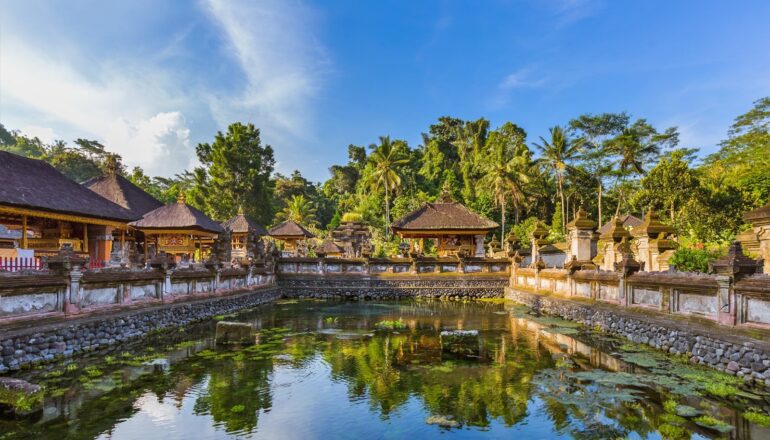
Next, you proceed into the Jaba Tengah, or middle courtyard. This is perhaps the most visited and photographed area of Tirta Empul. This zone is also the most spiritually active part of the temple. That’s because it contains the famous purification pools.
The pools are rectangular and filled with holy spring water. Water flows through a series of intricately carved spouts, each known as Pancuran. Visitors line up and move from one spout to the next. They wash their face, head, and hands under the flowing water.
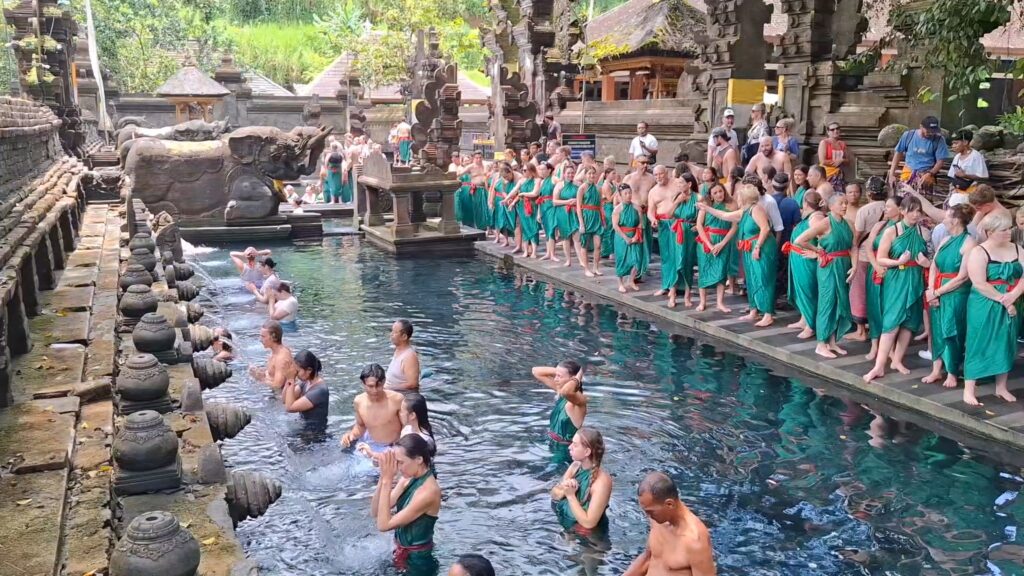
Furthermore, each spout has a specific meaning and is used for particular types of cleansing. For instance, some are for cleansing the mind, while others are for removing negative energy or seeking blessings.
Importantly, not all spouts are for everyone. A few are reserved for special rituals or for cleansing after a death in the family. Therefore, local guides or temple staff may assist visitors in understanding the proper sequence and usage.
Alongside the purification pool, this courtyard also features smaller shrines and stone steps. Statues of guardians and deities stand quietly, watching over the spiritual rituals. Tourists and locals alike pause here to observe or participate in the sacred water blessings.
3. The Inner Courtyard – Jeroan (Main Sanctum)
Finally, visitors who wish to go deeper into the spiritual heart of Tirta Empul enter the Jeroan, or inner sanctum. This area is reserved mainly for prayer and meditation. Unlike the lively atmosphere of the middle courtyard, the inner courtyard feels more tranquil and sacred.
As you step inside, you will notice a shift in energy. The air is quieter. Devotees gather around main shrines and meru towers, praying and making offerings. Incense smoke floats softly in the breeze. Moreover, colorful offerings called canang sari decorate the base of statues and altars.
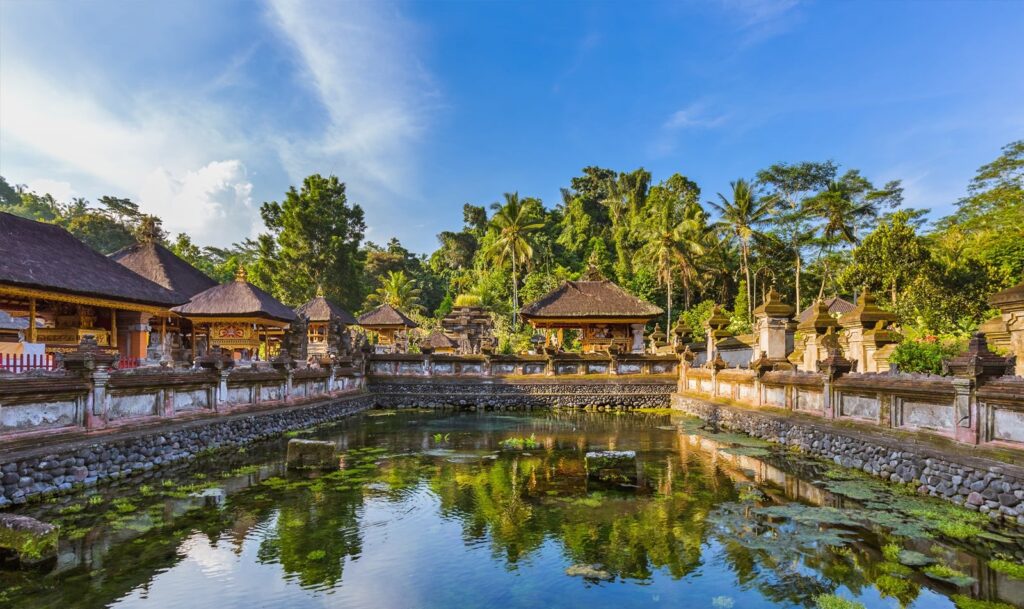
Inside the inner sanctum lies the source of the spring itself. This spring, bubbling up from underground, feeds the purification pools. Local priests consider it the most sacred part of the temple. Therefore, access is limited and usually only allowed during ceremonial rites or by permission.
Also, this space houses several Padmasana shrines – sacred thrones dedicated to the supreme god, Sang Hyang Widhi Wasa. Rituals and traditional prayers are regularly held in this part of the temple, especially on holy days such as Purnama (full moon) and temple anniversaries.
4. Additional Structures in the Temple Complex
Beyond the three main zones, Tirta Empul Temple also includes several additional architectural and spiritual elements. For example, there is a Wantilan Hall near the entrance. This is a traditional Balinese pavilion where gamelan musicians perform and where temple ceremonies are rehearsed.
Furthermore, the temple grounds include priests’ quarters, rest areas, and changing rooms for those participating in purification rituals. To make the experience comfortable, modern visitors can also find lockers, sarong rental areas, and information boards.
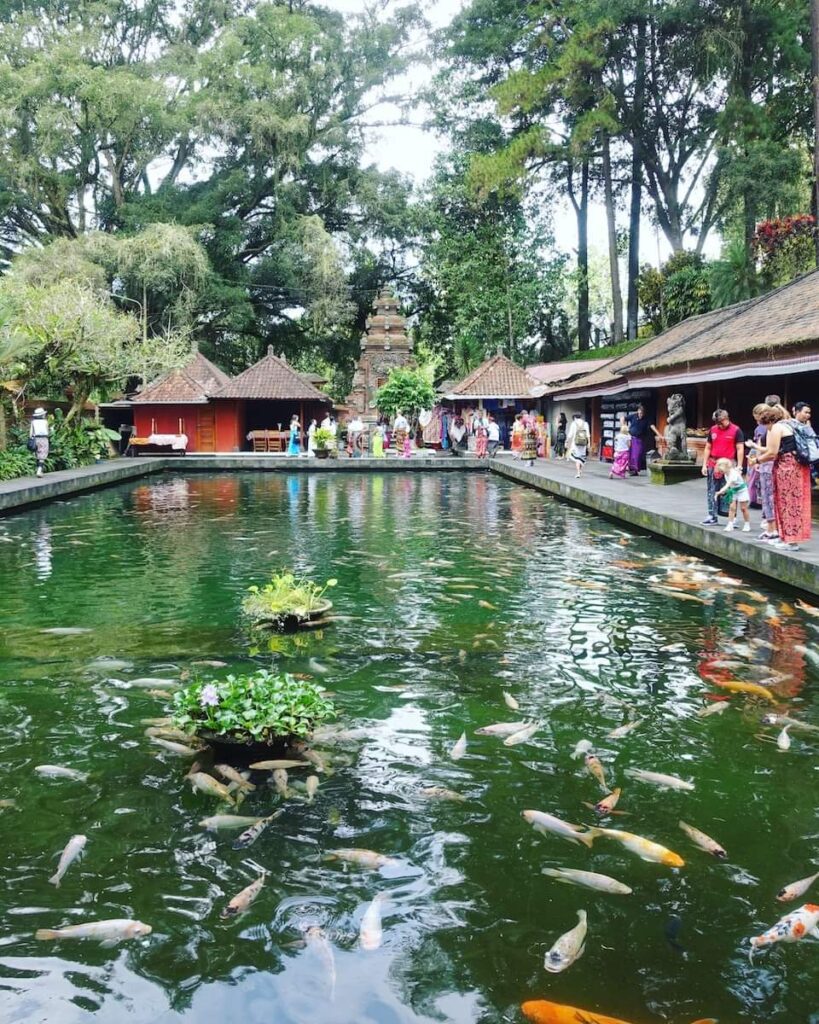
Just outside the temple, you will see a holy fish pond, teeming with colorful koi fish. Many locals believe these fish bring good luck and spiritual balance.
At the back of the temple, a small path leads up to a hilltop viewpoint. From here, visitors can admire the panoramic view of Tirta Empul’s roofs, ancient walls, and the sacred springs. Also nearby stands the Tampaksiring Presidential Palace, once built for President Soekarno. It offers a striking backdrop to the temple landscape.
5. Temple Layout and Symbolism
The layout of Tirta Empul is not just practical; it is deeply symbolic. According to Balinese Hindu beliefs, the Tri Mandala system represents the journey of the soul. The journey moves from the profane (Jaba Pisan), through the purification process (Jaba Tengah), and finally into the sacred (Jeroan).
Each section becomes more purified and spiritual as one progresses inward. Thus, the layout mirrors the spiritual transformation of anyone who visits the temple with a sincere heart.
Moreover, the orientation of the temple follows kaja-kelod principles – kaja meaning towards the mountain (spiritually higher), and kelod meaning towards the sea (more worldly). Tirta Empul’s inner sanctum faces the mountain direction, signifying its spiritual importance.
6. How to Navigate the Temple Respectfully,
When visiting, it’s important to follow the layout respectfully. Begin by cleansing your mind in the outer courtyard. Then, proceed to the purification pools in the middle courtyard. Finally, approach the inner sanctum with quiet reverence.
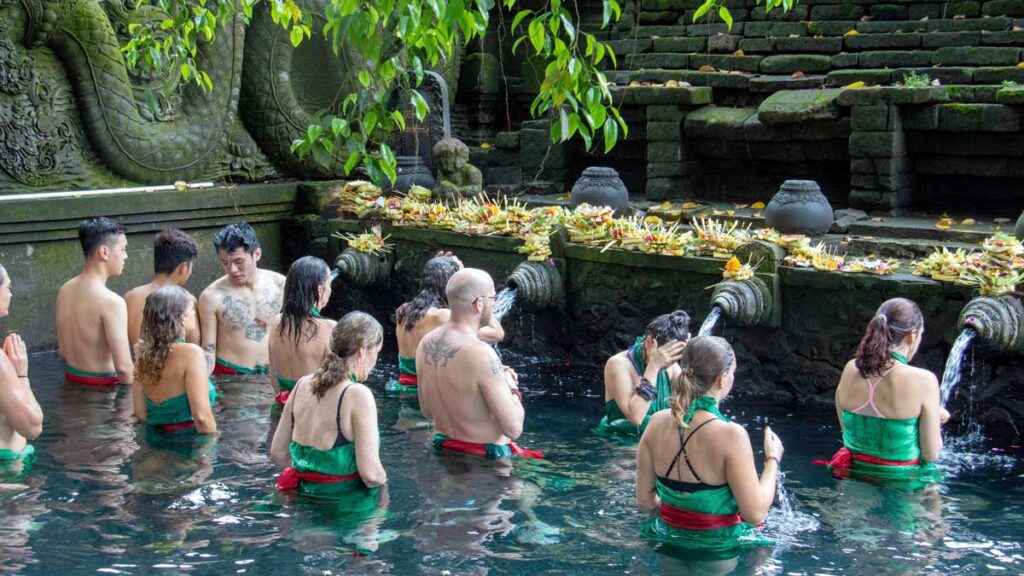
Always wear a sarong and sash, available at the entrance. Also, never step on offerings, and avoid loud behavior in the inner courtyard.
With that in mind, the temple layout is not just a design—it is a sacred journey. It allows every visitor to move from the outer world into the heart of Balinese spirituality.
The Best Trip Destination
Bali, Indonesia, beckons with its diverse allure. Explore Ubud’s cultural treasures, witness the iconic Tanah Lot Temple at sunset, and surf the waves of Kuta Beach. Discover the scenic beauty of Tegallalang Rice Terraces and embrace the lively atmosphere of Seminyak. Dive into the underwater wonders of Amed, relax on the pristine shores of Nusa Dua, and wander through ancient temples in the heart of Bali. Whether seeking vibrant nightlife, serene landscapes, or cultural richness, Bali’s enchanting destinations cater to every traveler’s desire.

Ubud (18 Trips)

Eastern Bali (7 Trips)
Southern Bali (5 Trips)

Northern Bali (5 Trips)

Nusa Penida Island (8 Trips)

Western Bali (5 Trips)
The Best Activities In Bali
Indulge in Bali’s diverse activities, from surfing the waves in Kuta to exploring cultural treasures in Ubud. Snorkel vibrant coral reefs in Amed, trek lush rice terraces, and rejuvenate in serene spa retreats. Dive into the lively nightlife of Seminyak, witness traditional dance performances, and sample local delicacies in bustling markets. Whether it’s hiking Mount Batur for a sunrise vista or embracing the spiritual ambiance of ancient temples, Bali offers a kaleidoscope of experiences for every traveler’s passion.

Trekking and Hiking (5 Trips)

Snorkeling and Scuba Diving (3 Trips)

ATV Quad Bike (2 Trips)

Bali Water Sport (3 Trips)

Bali Rafting and Tubing (5 Trips)