Bali is not only famous for its beaches and natural beauty but also for its deep spiritual traditions. Among the most fascinating experiences you can have in Bali is the holy water purification ritual. Many travelers visit Bali’s sacred temples to take part in this meaningful spiritual activity.
This ritual, known as Melukat in Balinese, aims to cleanse the mind, body, and soul. The holy water purification takes place in temples that have natural springs. The two most popular temples for this ritual are Tirta Empul Temple in Tampaksiring and Sebatu Holy Water Temple near Ubud.
In this blog post, you will discover everything you need to know about Bali’s holy water purification. You will learn its history, meaning, how to participate, what to expect, and helpful tips to make your experience unforgettable.
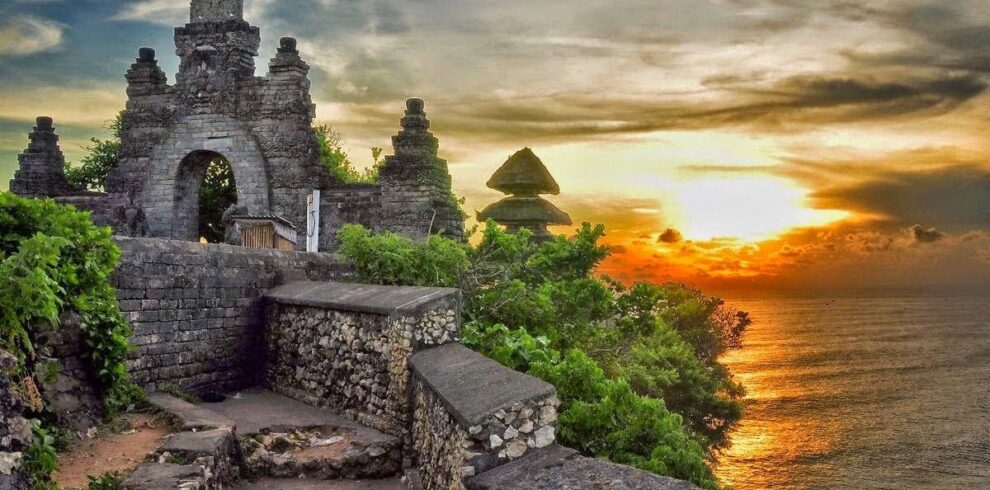
Read here: Uluwatu Temple: A Sacred Cliffside Legacy in Bali
The Spiritual Meaning of Holy Water Purification in Bali
Bali’s spiritual life is deeply connected to nature and water. Water is seen as the source of life and a symbol of purity. Balinese Hindus believe that bathing in holy water helps remove bad energy and restore balance.
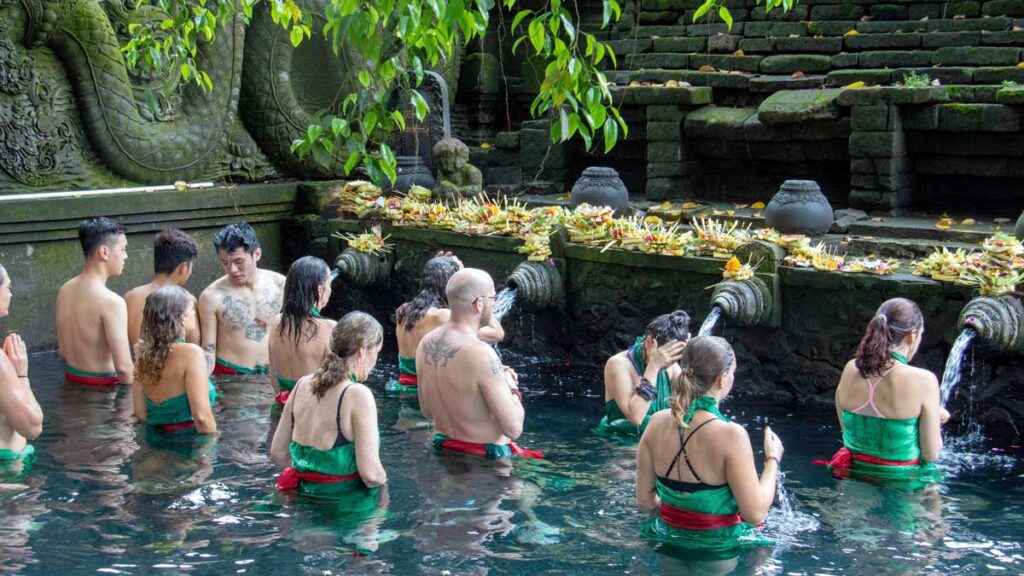
The ritual of Melukat is performed to cleanse both physical and spiritual impurities. People do this purification before important life events, such as marriage, religious ceremonies, or during times of emotional stress.
Moreover, Balinese locals also perform the ritual during full moon or new moon days because they believe those times have stronger spiritual energy. Travelers are welcome to join as long as they show respect for the temple’s customs and dress modestly.
Famous Holy Water Temples in Bali
1. Tirta Empul Temple
Tirta Empul Temple is one of the most famous purification temples in Bali. Located in Tampaksiring, about 30 minutes from Ubud, this temple attracts both locals and foreigners. The temple was built in 962 AD during the Warmadewa dynasty.
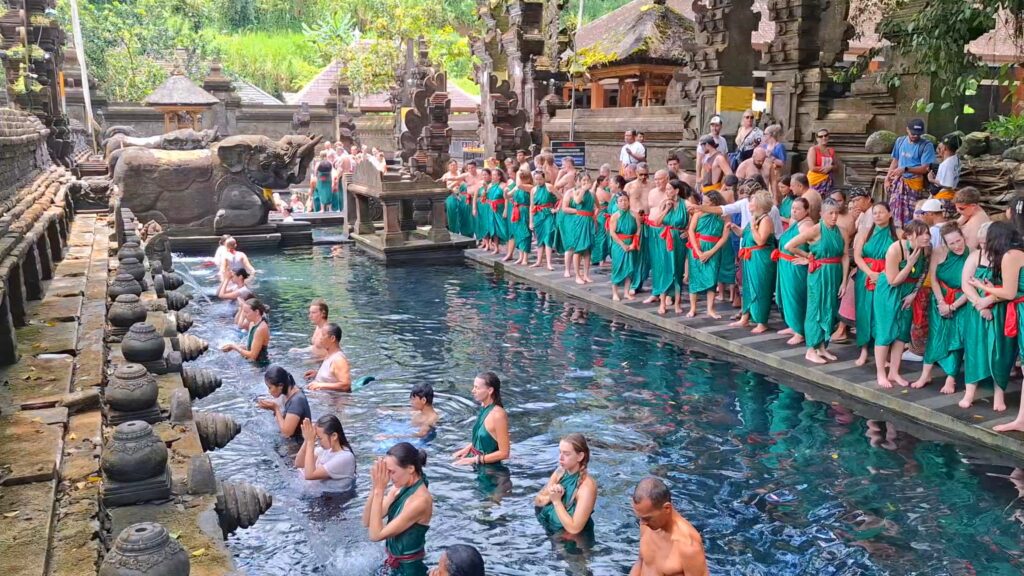
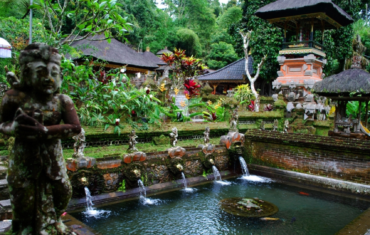
It has a large pool fed by 30 natural springs. People line up to bathe under each water spout, following a specific order. Each spout symbolizes a different aspect of cleansing—physical, emotional, and spiritual.
As you walk inside the temple, you will see stunning traditional Balinese architecture, detailed stone carvings, and serene surroundings. The peaceful sound of running water makes the experience even more special.
2. Sebatu Holy Water Temple
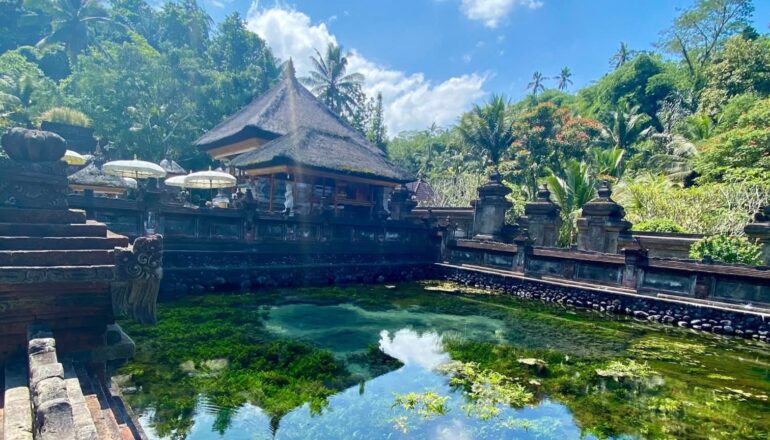
Another beautiful purification temple is Sebatu Holy Water Temple, also known as Pura Gunung Kawi Sebatu. Located near Ubud, this temple is less crowded than Tirta Empul. It sits in a lush forest surrounded by ponds filled with koi fish and lotus flowers.
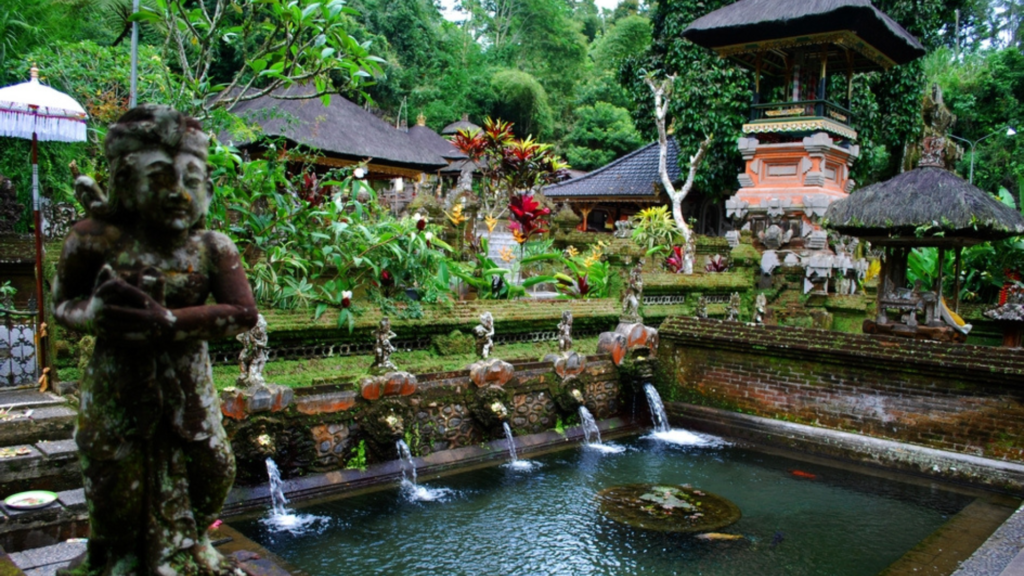
The water here comes from a sacred spring believed to have healing properties. Locals often visit Sebatu to pray for good health and spiritual peace. The calm and natural atmosphere makes it perfect for travelers seeking a more private cleansing experience.
3. Mengening Temple
Pura Mengening is another hidden gem for purification. It lies close to Tirta Empul but remains quiet and less touristy. The temple has two purification pools—one for men and one for women. The setting feels authentic and sacred.
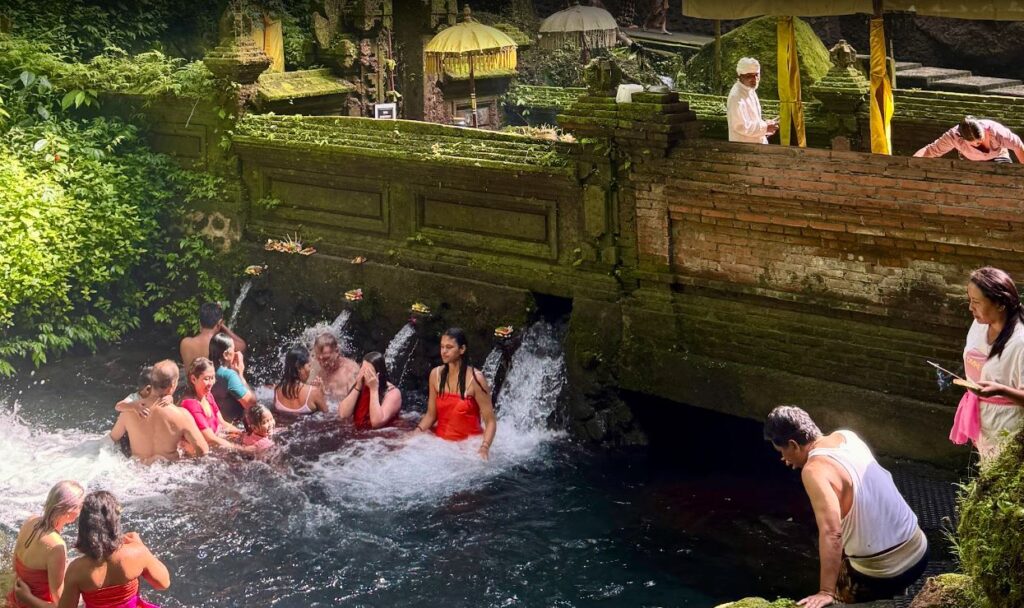
If you want to experience a traditional Melukat ceremony in a peaceful environment, Mengening Temple is an excellent choice.
How to Join a Purification Ceremony
Joining a purification ritual in Bali is simple and open to everyone. However, there are several important steps to follow:
- Dress Properly
You must wear a sarong and sash before entering the temple. These can be rented at the temple entrance. The attire shows respect for the sacred space. - Make an Offering
Before starting the ritual, you will prepare a small offering called canang sari. It is a simple tray made of palm leaves filled with flowers and incense. This offering shows gratitude to the gods. - Say a Prayer
Balinese people begin the ritual by saying prayers at the main shrine. You can follow the local guide or a temple priest to understand the process. - Enter the Holy Water Pool
Once your prayer is complete, you will step into the purification pool. The water can be cold but refreshing. You will move from one spout to another, washing your face and head under each stream. - Follow the Right Order
It’s important to skip certain spouts meant for funerals. A guide can tell you which ones to use. - End the Ceremony
After finishing all the water spouts, you can sit quietly and meditate. Many visitors feel calm and renewed after the ritual.
What to Expect During the Ritual
When you join the purification ceremony, expect a combination of emotions—peace, reflection, and spiritual awareness. The entire process takes about 45 minutes to one hour.
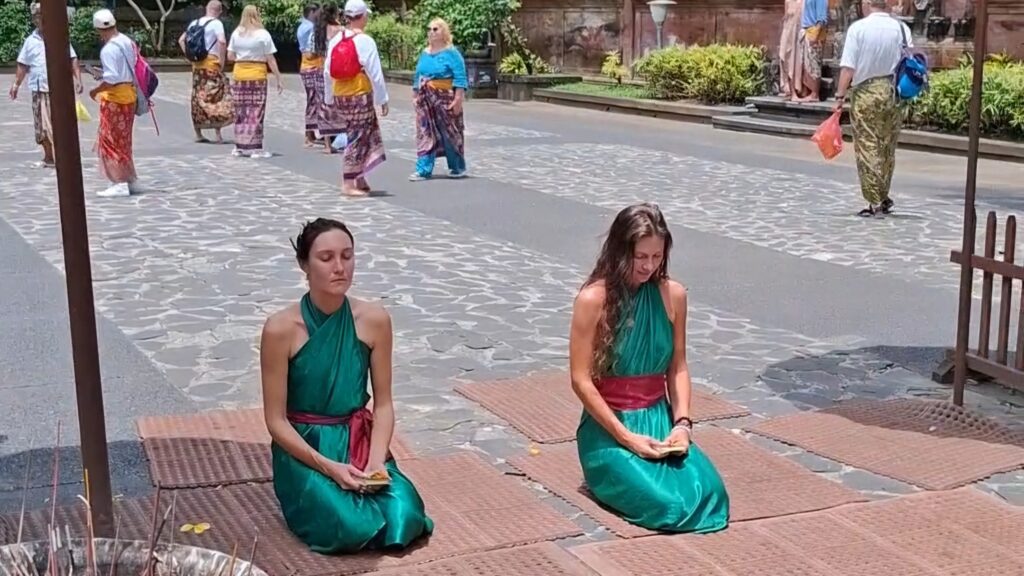
The temple area may be busy, especially at Tirta Empul. However, the line moves steadily. As you wait, you can observe how locals pray and show devotion. The atmosphere is filled with incense smoke, the sound of flowing water, and gentle chanting.
Once you enter the water, you might feel a deep sense of release. Many visitors say it feels like washing away stress and negative thoughts. After completing the ritual, most people sit for a while to reflect on their experience.
Best Time to Visit a Holy Water Temple
The best time to visit Bali’s purification temples is early morning or late afternoon. These times are quieter and cooler.
Avoid visiting during major Hindu ceremonies or public holidays, as the temples can be very crowded. However, if you want to observe authentic local rituals, visiting during these times can also be fascinating.
Between April and October, Bali experiences dry weather, which makes temple visits more comfortable.
What to Bring for the Purification Ritual
Here is a list of essential items to bring for your holy water temple visit:
- A change of clothes
- A sarong and sash (or rent at the temple)
- Small offering (available at the entrance)
- Waterproof bag for your belongings
- Towel and sandals
- Donation money for the temple
Remember, electronic devices should be kept away from the water area to avoid damage.
Nearby Attractions to Visit
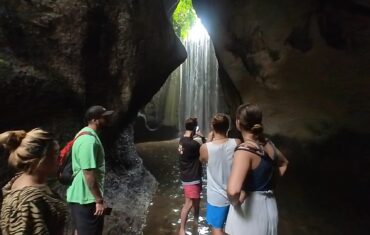
After your purification experience, you can explore nearby attractions. Many temples are located in scenic areas surrounded by rice terraces, waterfalls, and traditional villages.
Near Tirta Empul Temple
- Gunung Kawi Temple: Ancient rock-cut shrines from the 11th century.
- Tegallalang Rice Terrace: Iconic rice fields with panoramic views.
- Kintamani Volcano Viewpoint: Stunning view of Mount Batur and Lake Batur.
Near Sebatu Holy Water Temple
- Tegalalang Village: Known for arts, crafts, and cafes with rice field views.
- Tirta Empul: Only 10 minutes away, ideal for combining both temples.
- Tegallalang Swing: A fun experience flying over the rice terraces.
Nearby Mengening Temple
- Pura Gunung Kawi: Historical temple complex with stone carvings.
- Coffee Plantations: Try Bali’s famous Luwak coffee.

Cultural Etiquette and Temple Rules
When visiting Bali’s holy water temples, it’s essential to show respect:
- Always wear a sarong and sash.
- Avoid entering temple areas during menstruation.
- Do not climb or touch holy structures.
- Speak softly and behave politely.
- Avoid taking selfies during the ceremony.
- Always follow your local guide’s instructions.
Showing respect to Balinese culture ensures a positive and meaningful experience.
Tips for Making the Most of Your Visit
- Hire a Local Guide
A local guide can explain the temple’s history and guide you through the ritual. - Go Early in the Morning
The atmosphere is calmer, and you can enjoy the peaceful surroundings. - Bring an Extra Outfit
You will get completely wet during the ritual, so prepare dry clothes. - Stay Hydrated
Bali’s tropical weather can be hot, especially midday. - Join with an Open Heart
The purification is not only about washing the body but also cleansing the spirit.
Why You Should Experience Bali’s Holy Water Purification
Participating in a purification ceremony in Bali is more than just a cultural experience. It allows you to connect deeply with Balinese spirituality.
Unlike typical sightseeing, this ritual invites you to slow down and reflect. It helps you release negative emotions and restore your energy. Many visitors say it becomes the most memorable part of their Bali journey.
Moreover, this experience supports local traditions and temple communities. By joining, you contribute to preserving Bali’s sacred culture.
Bali’s purification holy water temples offer a rare opportunity to experience both beauty and spirituality. Whether you visit Tirta Empul, Sebatu, or Mengening, each temple provides a sense of peace and renewal. With simple rituals and heartfelt intentions, you can experience the true spirit of Bali.
As you leave the temple, you will feel lighter, calmer, and more connected to yourself and nature. This ancient Balinese tradition reminds us that cleansing the soul is just as important as exploring the island’s natural wonders.
So, during your next trip to Bali, take a moment to join a purification ritual. Let the holy water wash away your worries, and discover a deeper sense of peace within yourself.
The Best Trip Destination
Bali, Indonesia, beckons with its diverse allure. Explore Ubud’s cultural treasures, witness the iconic Tanah Lot Temple at sunset, and surf the waves of Kuta Beach. Discover the scenic beauty of Tegallalang Rice Terraces and embrace the lively atmosphere of Seminyak. Dive into the underwater wonders of Amed, relax on the pristine shores of Nusa Dua, and wander through ancient temples in the heart of Bali. Whether seeking vibrant nightlife, serene landscapes, or cultural richness, Bali’s enchanting destinations cater to every traveler’s desire.

Ubud (18 Trips)

Eastern Bali (7 Trips)
Southern Bali (5 Trips)

Northern Bali (5 Trips)

Nusa Penida Island (8 Trips)

Western Bali (5 Trips)
The Best Activities In Bali
Indulge in Bali’s diverse activities, from surfing the waves in Kuta to exploring cultural treasures in Ubud. Snorkel vibrant coral reefs in Amed, trek lush rice terraces, and rejuvenate in serene spa retreats. Dive into the lively nightlife of Seminyak, witness traditional dance performances, and sample local delicacies in bustling markets. Whether it’s hiking Mount Batur for a sunrise vista or embracing the spiritual ambiance of ancient temples, Bali offers a kaleidoscope of experiences for every traveler’s passion.

Trekking and Hiking (5 Trips)
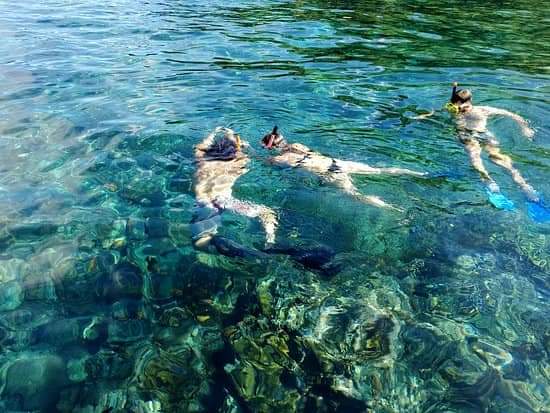
Snorkeling and Scuba Diving (3 Trips)

ATV Quad Bike (2 Trips)

Bali Water Sport (3 Trips)

Bali Rafting and Tubing (5 Trips)